

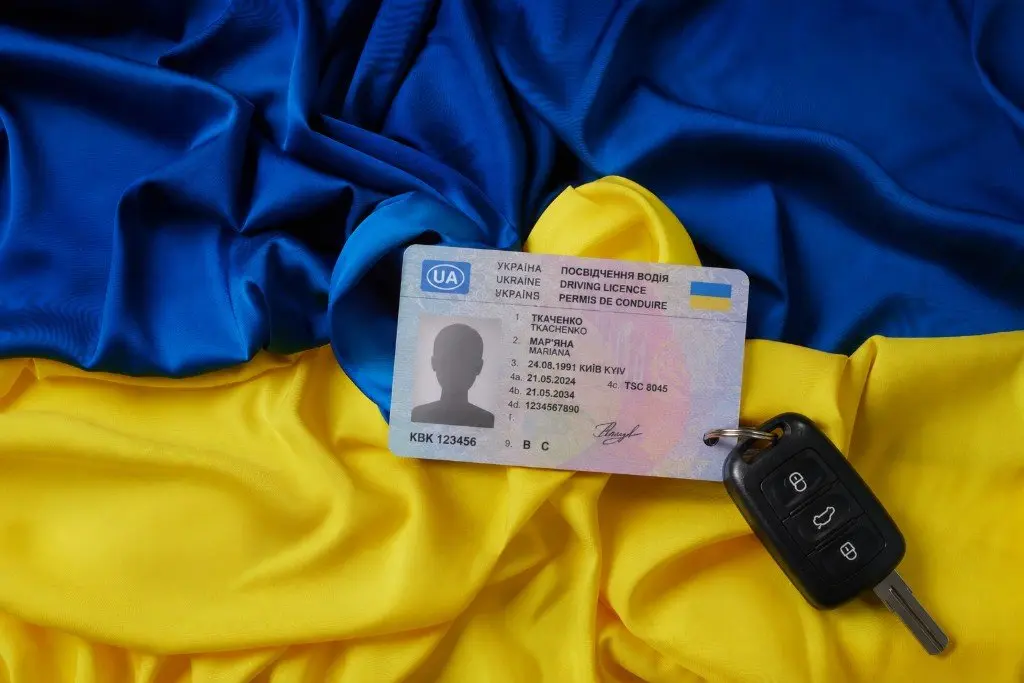
Since 18 August 2026, Ukraine has officially been included in Annex 11 (Anlage 11) of the German Driving Licence Regulation (Fahrerlaubnis-Verordnung, FeV). For most categories, this means that the theory and practical tests are no longer required when exchanging a Ukrainian driving licence for a German one. In this article we look at the new legal situation, how the categories correspond, the exchange procedure, the documents required and the costs – for people living in Germany who want to exchange a Ukrainian licence for a German one, and for employers and families helping them.

1. What changed on 18 August 2026 and why it matters
Until mid-2026 there was no agreement between Germany and Ukraine on the mutual recognition of driving licences. Anyone living permanently in Germany generally had to exchange their Ukrainian licence for a German one – including theory and practical tests, almost as if obtaining a licence from scratch. With its resolution (Bundesrats-Drucksache 318/26), the Bundesrat approved an amendment to the Fahrerlaubnis-Verordnung that adds Ukraine (together with Montenegro) to the so-called Anlage 11 FeV list. This change came into force on 18 August 2026.
Anlage 11 FeV is the official list of states whose driving licences can be exchanged in Germany under a simplified procedure in accordance with § 31 FeV, mostly without repeat tests. Including Ukraine in this list means recognising that Ukrainian driver training is in principle equivalent to the German system: licence holders do not have to go through the full German testing procedure again.
The exchange does not happen automatically. Even after the change in the law, nobody is issued a German licence just like that. Everyone still has to apply in person for the exchange under § 31 FeV at the competent authority – the Fahrerlaubnisbehörde (driving licence authority at the Landratsamt or the administration of an independent city, according to your place of residence) – and prove that they meet the statutory conditions.
2. The legal basis: three levels of rules for Ukrainian licences
For Ukrainian citizens living in Germany, three legal levels currently apply at the same time, and it is important to distinguish between them:
- EU Regulation 2022/1280: recognises valid Ukrainian driving licences in the EU as long as their holder enjoys temporary or adequate national protection – with no obligation to exchange during this period.
- § 24 AufenthG (temporary protection): people with a residence permit under § 24 AufenthG (Residence Act) may drive on their valid Ukrainian licence as long as this status continues.
- § 31 FeV in conjunction with Anlage 11 FeV: as soon as a permanent residence (ordentlicher Wohnsitz) is established in Germany, or temporary protection ends and a different residence permit is issued, the normal exchange obligation applies – since 18 August 2026 without tests for most categories.
In practice this means: as long as protection status under § 24 AufenthG continues, there is generally no need to exchange the licence immediately. When the residence status changes, permanent residence becomes a prospect, or the standard six-month period after establishing permanent residence starts to run, the exchange becomes necessary in order to continue driving legally.
3. Which Ukrainian licence categories are exchanged without tests
Under the new version of Anlage 11 FeV, the following applies in principle to the Ukrainian categories A1, A, B, BE, C1, C1E, C, CE, D1, D1E, D and DE: neither a theory nor a practical test is required. The table below shows how the categories correspond and any additional conditions.
| Category (Ukraine) | German equivalent | Theory test | Practical test | Additional proof required |
|---|---|---|---|---|
| A1 | AM (moped / light motorcycle) | no | no | no additional documents under Anlage 11 |
| A | A (motorcycles) | no | no | no additional documents under Anlage 11 |
| B | B (cars up to 3.5 t) | no | no | no additional documents under Anlage 11 |
| BE | BE (car with trailer) | no | no | no additional documents under Anlage 11 |
| C1, C1E | C1, C1E (light lorries) | no | no | fitness under Anlage 5, eyesight under Anlage 6 |
| C, CE | C, CE (lorries) | no | no | fitness under Anlage 5, eyesight under Anlage 6 |
| D1, D1E | D1, D1E (minibuses) | no | no | fitness under Anlage 5, eyesight under Anlage 6 |
| D, DE | D, DE (buses) | no | no | fitness under Anlage 5, eyesight under Anlage 6 |
Source: Anlage 11 FeV as in force from 18 August 2026.
Category C or D without category B. If the Ukrainian categories C or D were issued without category B being held at the same time, both a theory and a practical test will be required to obtain the German category B. Issuing category C or D without a previously held category B is not provided for in Germany.
For categories A1, A, B and BE, the official note in Anlage 11 FeV does not require any additional proof. In addition, § 31 Abs. 1 Satz 1 FeV generally exempts licence holders from Anlage 11 states from the medical examination, the mandatory eye test, the first aid course and driving school training requirements – regardless of category. Only for the professional categories C1, C1E, C, CE, D1, D1E, D and DE does the special note on Ukraine reintroduce the obligation to prove medical fitness under Anlage 5 and eyesight under Anlage 6 – the exemption from the first aid course remains. In practice, individual authorities may still request an eye test for other categories as well: this is at the discretion of the competent authority under state law, so it is worth checking in advance.
4. Who the new exchange rules apply to
Residence in Germany
Ukrainian citizens with a valid Ukrainian licence who have established, or are establishing, permanent residence in Germany.
Change of residence status
People whose protection status under § 24 AufenthG is ending or who are moving to a different residence permit and plan to stay in Germany long term.
Short stays without registration
Short trips without registering a residence – in this case a Ukrainian licence is generally valid for the duration of the stay, usually together with a certified translation.

5. How to exchange a Ukrainian licence: step by step
- Identify the competent authority. The Fahrerlaubnisbehörde is determined by your main place of residence (Hauptwohnsitz): it is the Landratsamt or the Bürgeramt / Führerscheinstelle (driving licence office) of an independent city.
- Prepare the documents. The original licence, a translation (if required), proof of identity and residence – details in section 6.
- Apply for the exchange under § 31 FeV. In person at the Führerscheinstelle, often with an online appointment booked in advance.
- Authenticity and validity check. The authority checks the Ukrainian document – if necessary by contacting the issuing authority in Ukraine.
- Issue of the German licence. After a positive check – usually within a few weeks; in some cases longer if additional documents are needed.
6. Which documents you need to exchange your licence
The exact list of documents may vary slightly depending on the district (Landkreis) or independent city. As a rule, you need:
| Document | Comment |
|---|---|
| Valid Ukrainian licence (original) | It is withdrawn on exchange, or information is passed on to the Ukrainian authorities |
| Translation of the licence | See the explanation below – depends on the card format and the requirements of the authority concerned |
| Passport or ID card | Proof of identity |
| Residence permit (Aufenthaltstitel) | Proof of residence status in Germany |
| Registration certificate (Meldebescheinigung) | Proof of permanent residence |
| Biometric photo | Usually no older than six months |
§ 31 Abs. 1 Satz 1 FeV expressly exempts licence holders from the states listed in Anlage 11 from a number of usual requirements: the medical examination under § 11 Abs. 9, the eye test under § 12 Abs. 6, the first aid course under § 19 and the training requirements. This exemption applies equally to all categories. The special official note on Ukraine in Anlage 11 reintroduces only the proof under Anlage 5 (fitness) and Anlage 6 (eyesight) for categories C1, C1E, C, CE, D1, D1E, D and DE – the first aid course is expressly excluded for all Ukrainian categories, including professional ones. So a first aid course is generally not required to exchange a Ukrainian licence.
Is a certified translation really necessary? Ukrainian licences in the modern card format (issued since 2015) already contain the holder’s details in two scripts – Ukrainian and Latin transliteration – and comply with the model in Annex 6 of the 1968 Vienna Convention on Road Traffic. So no additional translation needs to be carried when driving on a valid Ukrainian licence. For the exchange under § 31 FeV, however, authorities take different approaches to translation: some accept the bilingual card directly, while others still require a certified translation by a sworn translator (öffentlich bestellter und beeidigter Übersetzer) – especially for old licences in Cyrillic only (issued before 2015). Check this with your Führerscheinstelle before applying.
For the professional categories C1, C1E, C, CE, D1, D1E, D and DE you will also need:
- a medical certificate of fitness (Anlage 5 FeV);
- an ophthalmologist’s report or the result of an eye test (Anlage 6 FeV);
- with code 95 (professional driver qualification) – proof of the corresponding qualification or further training.
7. Authenticity check: comparison with registers and databases
Because forged licences or licences reported as lost are a known risk, German authorities check Ukrainian documents carefully. Some Landratsämter additionally request an extract or confirmation from the Ukrainian issuing authority that the licence was issued and is valid – an actual register extract, not just a translation of the card.
If you want to check in advance whether your document has been correctly entered in the Ukrainian register, you can do so via official Ukrainian channels:
- the “Electronic Driver’s Account” (Електронний кабінет водія) on the website of the Main Service Centre of Ukraine’s Ministry of Internal Affairs;
- the Diia app – automatic check after logging in.
Avoid unofficial checking services. Use only official Ukrainian government channels to check the register. Unofficial websites offering a “quick check” for money carry a risk of personal data misuse and do not provide legally valid confirmation.
8. How much it costs to exchange a Ukrainian licence in Germany
The administrative fee is based on the Fee Regulation for Road Traffic Measures (Gebührenordnung für Maßnahmen im Straßenverkehr, GebOSt) and is set by the individual municipality, so the exact amount varies by federal state and district. As a guide – the rates published, for example, in Berlin:
| Cost item | Berlin (example) | Range across Germany |
|---|---|---|
| Exchange without a test | €37.50 | approx. €35–60 |
| Exchange with a test (special case: B when holding C/D) | €45.10 | approx. €40–70 |
| Biometric photo | – | approx. €8–15 |
| Certified translation (if required by the authority) | – | approx. €50–100 |
| Eye test / ophthalmologist’s report (C1–DE only) | – | approx. €6–10, or more for a medical report |
Berlin rates according to the city’s service portal; check current amounts locally.
Because the specific fee rates are set at municipal level, check them directly with your Führerscheinstelle before applying.
9. Exchange deadlines and the consequences of missing them
If the standard exchange deadline after establishing permanent residence in Germany is missed, the foreign licence generally ceases to be valid for driving in Germany. Anyone who continues to drive after that risks criminal liability for driving without a licence under § 21 of the Road Traffic Act (Straßenverkehrsgesetz, StVG). So check your personal deadline with the competent authority early – ideally immediately after registering your residence: depending on your residence status, it may start at different times.
10. Common mistakes when exchanging a Ukrainian licence
- Ordering a certified translation unnecessarily, although the authority would have accepted the bilingual card directly – asking in advance saves time and money.
- Submitting an ordinary rather than a certified translation for old Cyrillic-only licences (pre-2015) – authorities do not accept it.
- No proof of registered address, even though the actual centre of life is already in Germany.
- A Ukrainian category C or D without the basic category B – then a full test will still be required for B.
- Confusing the right to drive temporarily on a Ukrainian licence with the obligation to exchange it after establishing residence.
- Starting the process too late – especially for professional categories with additional medical reports, allow extra time.
- Signing up for a first aid course “just in case”, although under § 31 Abs. 1 FeV it is not required for exchanging a Ukrainian licence.
11. Frequently asked questions about exchanging a Ukrainian licence
Do I have to exchange my Ukrainian licence immediately?
Will I have to take a test for category B?
What happens to the Ukrainian licence after the exchange?
Does the simplified exchange also apply to lorry and bus categories?
Is a first aid course required for the exchange?
Could the rules change again?
Administrative matters such as exchanging a driving licence are often just one part of a wider plan for settling in and starting a business. If you want to understand how residence status, trade registration and starting your own business fit together in Germany, our education programmes – for example start-up coaching (Gründungscoaching) – will help you work through the first steps in practice, taking your situation into account.
Book a consultationLegal notice: This article is for general information and educational purposes only. It does not constitute legal, tax, financial or individual administrative advice and does not replace a review of your specific situation by the competent Fahrerlaubnisbehörde, a lawyer or another qualified professional. Legislation and administrative practice may change; the application of the rules depends on individual circumstances, and every situation needs to be assessed separately. Before making important decisions, check the current requirements directly with the competent authority or consult a qualified professional. Vitavia Akademie does not replace public authorities or individual legal advice. See also: Impressum and Datenschutz.
Sources
- Bundesrat, Drucksache 318/26 – regulation amending the Fahrerlaubnis-Verordnung and other road traffic rules
- Bundesgesetzblatt Teil I, 17 August 2026, No. 236
- Fahrerlaubnis-Verordnung (FeV), § 19, § 31 and Anlage 11
- ADAC – Führerscheinumschreibung für Flüchtlinge
- Service Berlin – exchanging a foreign driving licence from non-EU/EEA countries
- Regulation (EU) 2022/1280